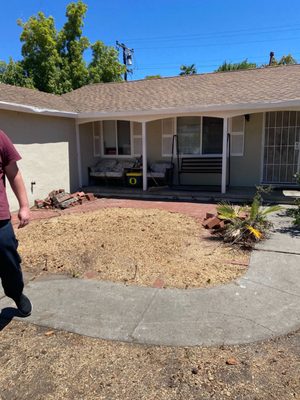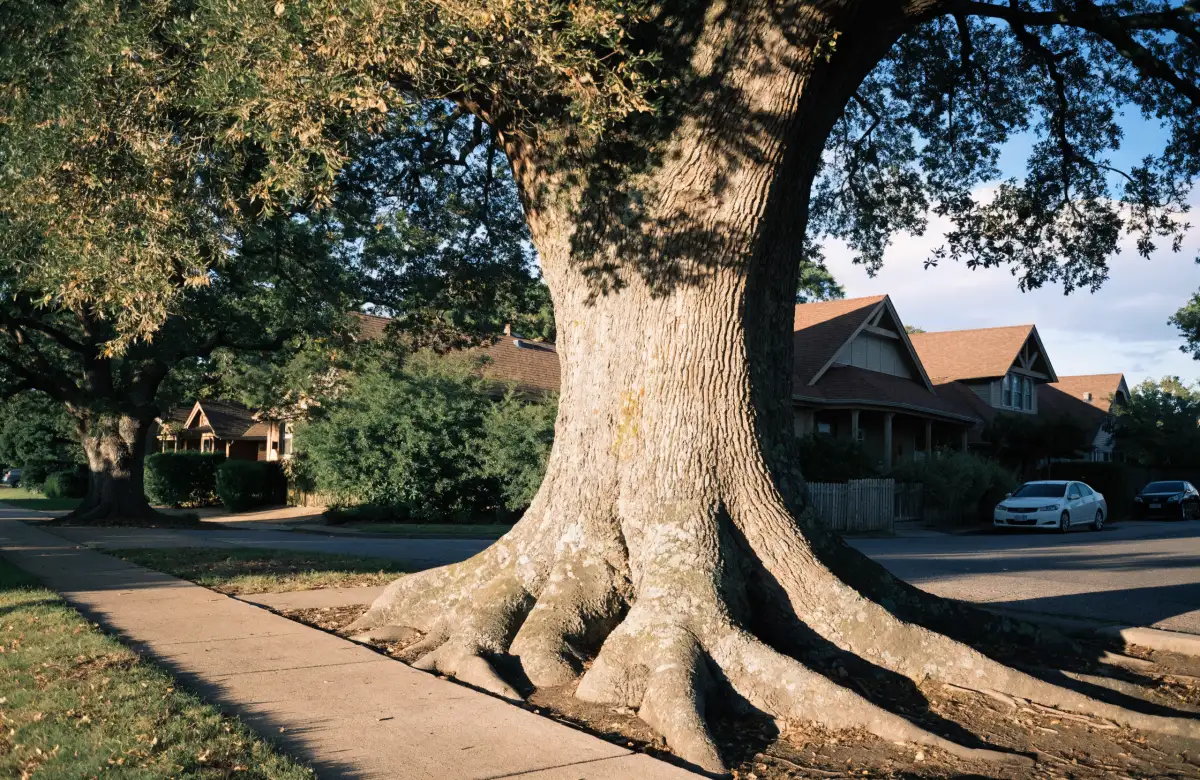

Defensible space in Los Gatos is the cleared and thinned ground around your home that keeps a wildfire, and the embers it throws ahead of itself, from finding a path to the house. The Town says southern Los Gatos is in a Very High Fire Hazard Severity Zone, so for thousands of homes in the hills this is not optional upkeep. Trees are usually the hardest part to get right, because they are the biggest fuel on the lot and many of them are protected by the Town’s tree ordinance.
Firefighter Tree Service is firefighter-owned, by owner Dennis Santora, and our ISA-certified arborists do fire clearance and tree work across Los Gatos. This guide sticks to what the Town of Los Gatos, the Santa Clara County FireSafe Council and the state have actually published, as of October 2026.
Defensible space covers both the obvious work (clearing dry brush and dead wood) and the work most people skip (breaking the vertical path from grass to canopy). If you just bought in the hills off Highway 17 and inherited a lot full of oaks and dry undergrowth, this is where to start. If you have cleared for years and keep hearing about a new “Zone 0,” the state’s status is explained plainly below. And if you are unsure whether limbing up your oaks needs a permit, there is a section on exactly that.
You will come away knowing which rules apply to your home today, which tree work makes the biggest difference, how to get rid of the brush for free, and where the Town’s tree permits come in. We cover it in four parts: the local rules, the zones around the house, the tree work itself, and permits and timing.
Start with the question that decides how much of this applies to you: is your home in the high hazard zone?
Is Your Los Gatos Home in a Very High Fire Hazard Severity Zone?
According to the Town of Los Gatos wildfire preparedness page, “Southern Los Gatos is in a Very High Fire Hazard Severity Zone (VHFHSZ).” The Town adopted its current local fire hazard map in June 2025, through Resolution 2025-037 and Ordinance 2374, and the map is posted on the Town’s website so you can find your street.
The Town also calls Los Gatos “a state-recognized Fire Risk Reduction Community.” Fire service comes from the Santa Clara County Fire Department, which offers free wildfire inspections. Station 3 on University Avenue is the local station, at (408) 378-4010.
If your home is on the flat side of town near Vasona or Blossom Hill, the zone map may not put you in the highest category, but embers travel. Clearing dead leaves from gutters and keeping wood piles off the house are worth doing anywhere in Los Gatos. If you are in the hills along the Santa Cruz Mountains, the rest of this guide is aimed at you.
The Rules That Apply Today: Town Code and State Zone 0
Two different “5 foot” rules get mixed up in Los Gatos, and only one of them is in force. The Town’s rule for new homes has applied since 2020. The state’s Zone 0 rule for existing homes is not yet in effect.
The Town rule. In January 2020, the Town amended Chapter 9 of its code to adopt “a 5 foot nonflammable zone requirement around new structures in the WUI” (the wildland urban interface). At the same time it raised roadside weed abatement from 5 feet to 10 feet. If you are building new in the hills, the 5 foot zone is part of your project.
The state rule. State Zone 0 is a separate, statewide ember-resistant zone in the first 5 feet around buildings. The Board of Forestry adopted emergency Zone 0 regulations on August 19, 2026, and sent them for state review on August 28. On September 8, 2026, the Board withdrew the package from review to make technical edits. No new date has been announced. Until the rules are resubmitted and approved, the state Zone 0 rule is not yet in effect, and anyone quoting you a compliance deadline is guessing.
That does not make the first 5 feet unimportant. Embers that land in bark mulch, dry leaves or a juniper against the siding are how many homes catch. Clearing that strip is good practice now, whatever the regulators decide.
The Three Zones Around a Los Gatos Home
The Town’s wildfire guidance divides defensible space into three zones measured from the house: Zone 0 from 0 to 5 feet, Zone 1 from 5 to 30 feet, and Zone 2 from 30 to 100 feet. Each zone asks for a different kind of work, and trees matter in all three.
| Zone | Distance from the house | Tree and vegetation focus |
|---|---|---|
| Zone 0 | 0 to 5 ft | Nothing that burns: no bark mulch, dry leaves or woody plants against the walls; branches kept off the roof |
| Zone 1 | 5 to 30 ft | Dead wood and dry growth removed; trees limbed up and shrubs separated so fire cannot climb |
| Zone 2 | 30 to 100 ft | Fuel thinned: brush reduced, ladder fuels removed, space kept between tree canopies |
Many Hillside lots run out of property before 100 feet, and the slope changes the picture. Fire runs uphill faster, so trees and brush downhill from the house deserve more attention than the same plants on the uphill side.
Tree Work That Actually Reduces Fire Risk
The tree work that does the most for defensible space is removing ladder fuels, limbing up, and creating space between canopies. All three aim at the same thing: stopping a ground fire from climbing into the trees and running from crown to crown toward the house.
Remove ladder fuels
A ladder fuel is anything that lets fire step upward: tall dry grass under an oak, a shrub growing into low branches, a vine climbing a trunk, a dead limb hanging near the ground. Take away the rungs and a grass fire under a tree stays a grass fire. On many lots this is the cheapest work with the biggest effect, and much of it is brush and lot work rather than tree work. Our lot clearing service handles the brush side of it.
Limb up the lower canopy
Limbing up is tree trimming aimed at the lowest branches: it removes them so there is a clear gap between the ground fuels and the canopy. Done well, it opens the tree without starving it. Done badly, it strips so much live growth that the tree is stressed for years. On a protected tree it can also cross the Town’s 25% pruning line, which is covered below.
Create space between canopies
Trees whose crowns touch let fire move across the top of the lot. Thinning a dense stand, or removing one tree from a tight group, breaks that connection. This is where an arborist’s judgment matters most. The goal is to keep the healthiest, best-placed trees and remove the ones that are dying, crowded or leaning toward the house.
Clear the roof and the dead wood
Branches hanging over the roof drop leaves and needles into gutters, which is exactly where embers land. Dead limbs anywhere near the house are dry fuel. Picture a home near the end of a Hillside road with a big coast live oak shading the deck. The oak is healthy and worth keeping. The useful work is removing the dead limbs, lifting the canopy off the roof and clearing the dry leaf litter underneath, not taking the tree down. Most fire clearance looks like that: careful subtraction, not clear-cutting.
Getting Rid of the Brush: The County Chipping Program
The Santa Clara County FireSafe Council runs a free Community Chipping Program for County Fire District and wildland urban interface residents. A crew comes out and chips the brush you have cleared, so you do not have to haul it away.
The limits are strict, so read them before you pile:
- Limbs must be under 4 inches in diameter.
- Piles must be under 4 feet high.
- The maximum is 100 cubic yards.
You register through the Santa Clara County FireSafe Council chipping program, which books through reserve.chipperday.com/santa_clara.
Here is where it splits. If your clearing is mostly brush and small limbs, do it yourself, pile it to the program’s limits and book the chipper. If the job includes whole trees, limbs thicker than 4 inches, or anything overhead, the chipper program will not take it, and that part needs a tree crew with its own chipper and haul-away.
Say you spend two weekends cutting back coyote brush and thinning the small growth under your oaks, and end up with three neat piles of 2 inch branches. That is exactly what the chipping program is built for. The 10 inch dead limb that came down in the last storm is not.
How Los Gatos Tree Permits Interact With Fire Clearing
Fire clearance does not switch off the Los Gatos tree ordinance. A Town pruning permit is needed to remove more than 25% of a Protected Tree within any 3 year period, or to cut any branch over 4 inches in diameter on a Large Protected or Heritage Tree. Removing a Protected Tree needs a removal permit. We could not find a general fire-clearing exemption in the Town’s permit FAQ, so if you plan to remove a protected tree for fire safety, call Parks and Public Works at (408) 399-5771 before you start.
In practice, most defensible space work stays under those lines:
- Light limbing and dead wood removal on most trees usually stays well under 25% of the canopy.
- Exempt species do not need a permit below 24 inches in diameter: black acacia, tree of heaven, blue gum and red gum eucalyptus, palms other than Canary Island date palm, privet and tulip tree, plus other eucalyptus on Hillside lots. Several of those are among the trees homeowners most want gone near the house.
- Big oaks, madrones and buckeyes are where you need to be careful. Oaks, buckeyes and madrones 24 inches or more are Large Protected Trees, so even one 5 inch limb cut needs a permit.
Two more details matter for timing. The 25% limit counts across 3 years, so plan multi-year clearing on protected trees from the start. And the Town asks applicants to check for active bird nests, especially from February 1 to August 31, which overlaps the months most people start clearing.
Our Los Gatos tree removal permit guide covers the thresholds, fees and replacement rules in full. One point is useful here: no replacement trees are required when the tree is dead or rated High or Extreme risk by the Town Arborist, which covers many of the trees fire clearance is aimed at.
A Simple Order of Work for This Year
The most useful defensible space plan works from the house outward and does the permit-free work first. For a typical Los Gatos Hillside home:
- Clear the first 5 feet: gutters, roof, mulch, dry leaves and anything stored against the walls.
- Walk the lot for dead trees and dead limbs, and note which trees are protected (12 inches, or 8 inches on Hillside lots and for the native species).
- Do the brush and small limb work, and book the county chipper for it.
- Have the trees looked at and file any Town permits early, so the work can be scheduled before the dry months. Our Los Gatos tree removal cost guide shows how to budget for removals and replacement trees.
The near-term payoff is a lot that a fire crew can actually work in. The long-term one is a property where the trees you keep are healthier, better spaced and far less likely to carry fire to the house.
Fire Clearance and Tree Work With Firefighter Tree Service
Defensible space is where tree care and fire safety meet, and it is natural ground for a firefighter-owned company. Firefighter Tree Service is insured, our ISA-certified arborists know which Los Gatos trees are protected and which are not, and every estimate is free. When you are ready to walk the lot and plan the work, book a certified arborist visit or call (650) 454-0373.